Landed on the Moon Sensory Bin (Easy Space Sensory Idea)


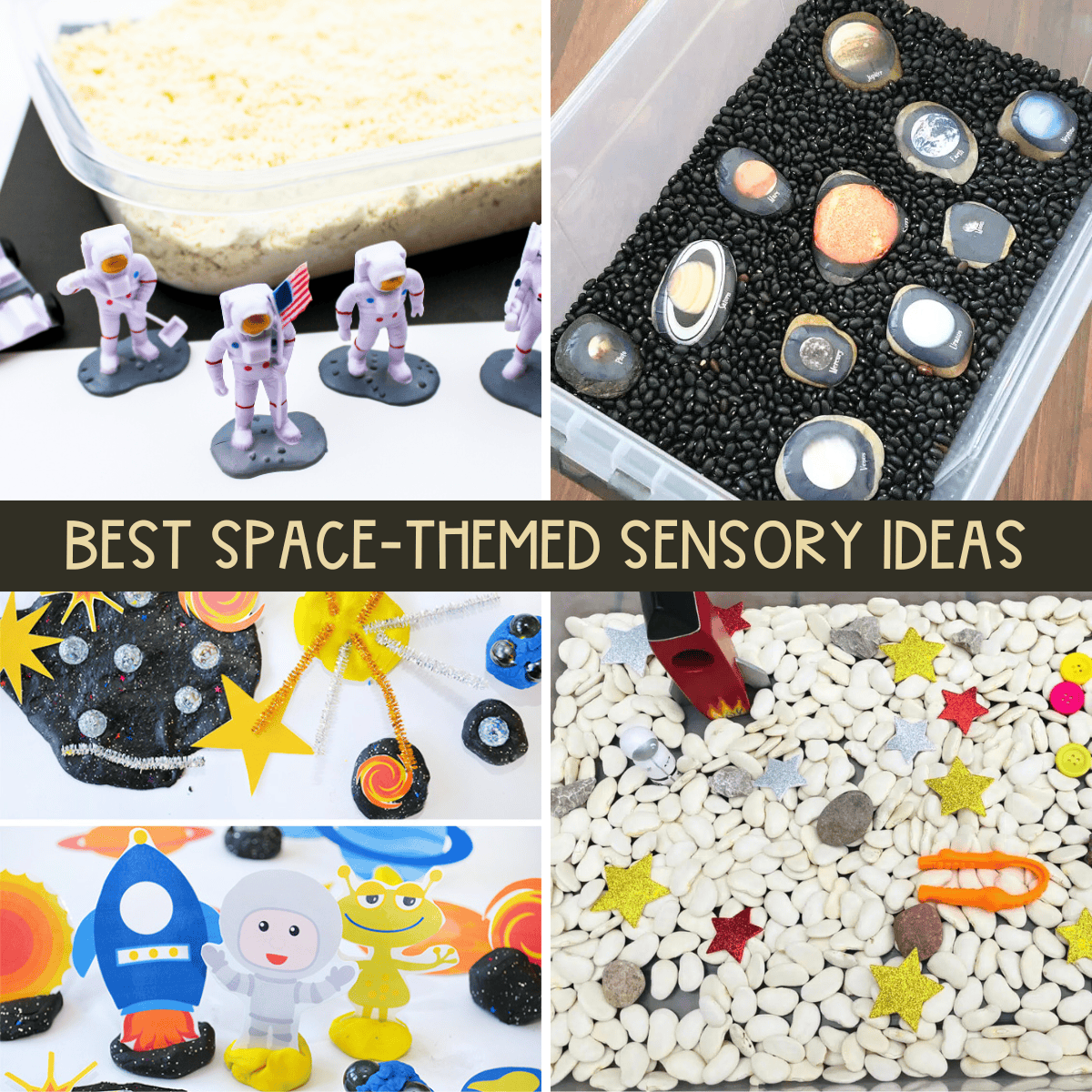
Our Moon Landing Sensory Bin is a hands-on space sensory activity designed for toddlers and preschoolers who love pretend play and exploration. This simple setup turns a bin into a dusty moon surface where little astronauts can land, explore, and imagine.
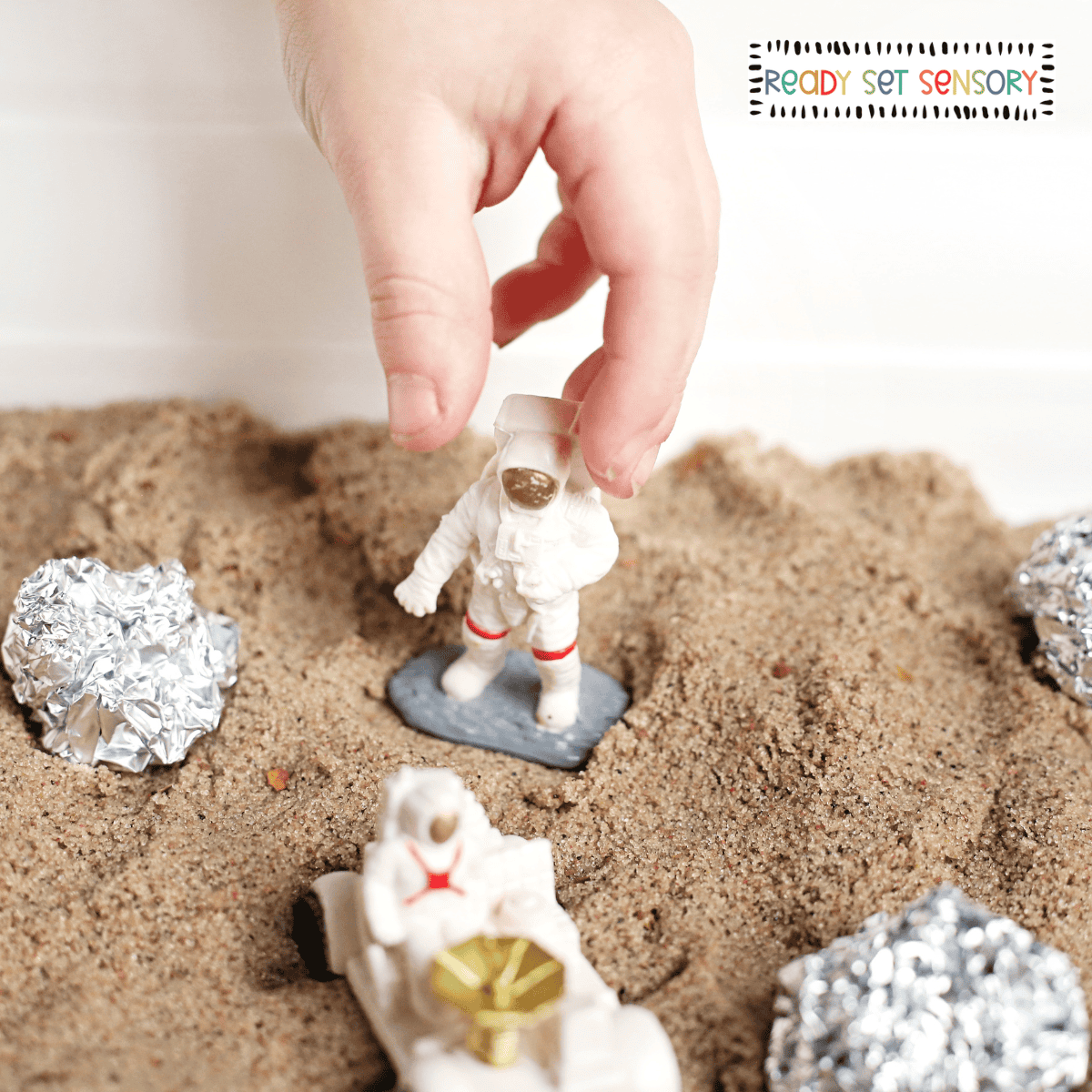
Kids press, scoop, and mold kinetic sand to make craters and footprints just like astronauts on the moon. Shiny foil rocks and small space toys make the scene feel exciting and inviting.

There are affiliate links in this post – please read my full disclosure policy. As an Amazon Associate, I earn from qualifying purchases.
This activity encourages slow, focused play as children move the rover, collect moon rocks, and explore textures with their hands. It works well for quiet playtimes, classroom centers, or space-themed learning.
The Moon Landing Sensory Bin invites creativity while keeping the setup easy and manageable for adults.
For other bins with fun themes, be sure to try the Circus Sensory Bin or the Toy Vet Clinic Sensory Bin. Rotating themed sensory bins keeps play fresh while still building familiar scooping, sorting, and pretend play skills.

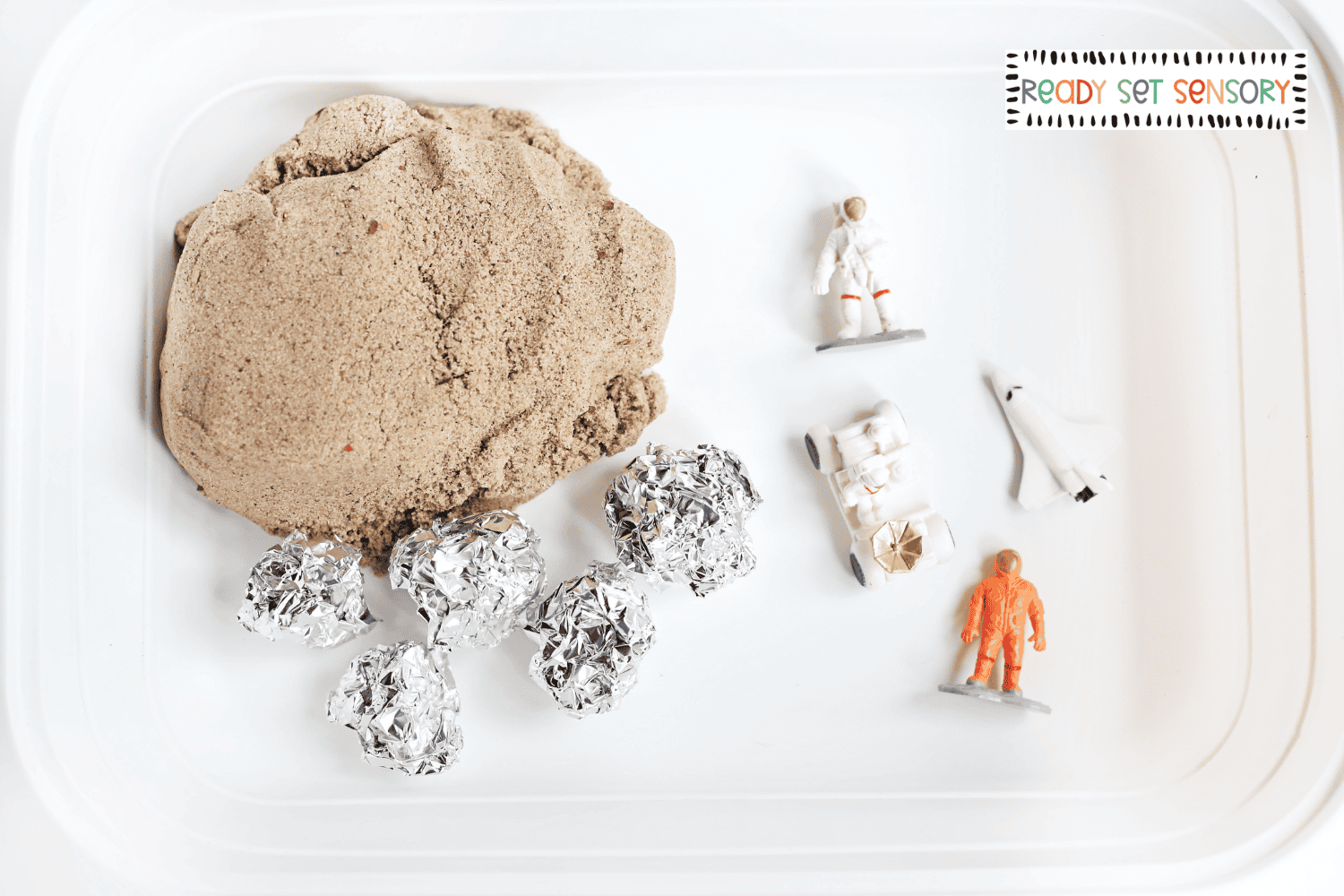
👇What You Need for a Moon Landing Sensory Bin
- Large sensory bin or shallow container
- Kinetic sand to cover the bottom of the bin
- Aluminum foil crumpled into small and medium balls for moon rocks
- Mini astronaut figures
- Toy rocket ship
- Toy lunar rover or small vehicle
- Optional small cups or scoops for collecting rocks
💕Favorite Sensory Supplies
No products found.

⭐️How to Set Up a Moon Landing Sensory Bin
Pour kinetic sand into the bin to create an even layer that mimics the moon’s surface.
Crumple aluminum foil into balls of different sizes and scatter them across the sand.
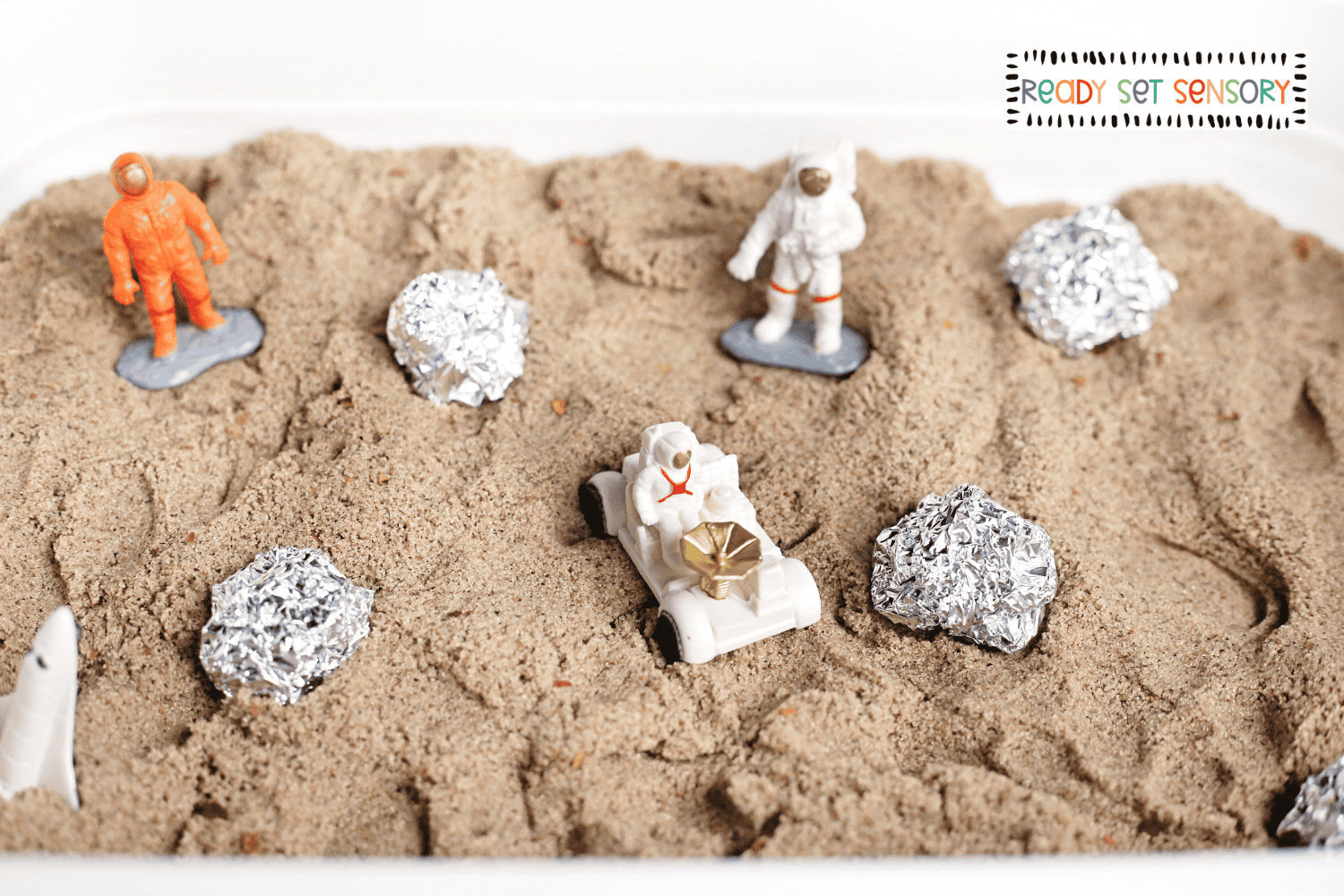
Place the rocket ship, astronauts, and rover on top of the sand.
Set the bin on a mat or table covering to help contain mess.
💫Ways to Play This Space Sensory Activity
Kids can land the rocket and place astronauts onto the moon surface. They can drive the rover through the sand and create tracks as it moves.
Children can press their fingers, toys, or rocks into the sand to form craters. Scooping and collecting foil moon rocks adds a simple mission-style goal.

Open-ended pretend play allows kids to create their own space stories while exploring textures and movement.
🧠Skills Kids Build in This Moon Landing Sensory Bin
- This activity supports fine motor strengthening as kids mold sand, grasp small objects, and move toys. These actions help build hand strength needed for early writing and daily tasks.
- Imaginative play grows as children invent astronaut missions and space adventures. Simple space themes also support early STEM curiosity in a playful way.
- The mix of soft sand and crinkly foil offers engaging sensory input that helps many kids focus and stay calm. Talking through play supports language development and storytelling.

💡Tips and Variations for Space Sensory Play
- Add small flags or blocks to create a moon base.
- Use measuring cups for moon rock collection to add simple math play.
- Swap kinetic sand for regular sand if preferred and appropriate for your setting.
- Limit materials for younger children to reduce overstimulation.

🧹Clean Up and Storage Tips for Sensory Bins
- Store kinetic sand in an airtight container to keep it usable. Foil rocks can be saved in a labeled bag for future play.
- Wipe toys clean and shake excess sand back into the bin. Use a small hand broom or vacuum for quick floor cleanup.
Space Exploration Moon Landing Sensory Bin

Materials Needed
- Large sensory bin or shallow container
- Kinetic sand
- Aluminum foil crumpled into balls
- Mini astronaut figures
- Toy rocket ship
- Toy lunar rover or small vehicle
- Optional cups or scoops
Instructions
- Pour kinetic sand into the bin to cover the bottom evenly.
- Crumple aluminum foil into small and medium balls to create moon rocks.
- Place foil rocks across the sand.
- Add astronaut figures, rocket ship, and rover to the bin.
- Set the bin on a mat or protected surface.
- Invite children to land the rocket, drive the rover, make footprints, form craters, and collect moon rocks.
Notes
- Add flags or blocks to build a moon base.
- Use measuring cups for moon rock collection.
- Swap kinetic sand for regular sand if needed.
- Reduce the number of items for younger children or group settings.