Toy Vet Clinic Sensory Bin (Easy & Low Prep!)


This toy vet clinic sensory bin gives toddlers and preschoolers a simple hands-on activity where they can pretend to care for a pet while exploring calming textures and practicing fine motor skills. This setup works well at home and in the classroom.
There are affiliate links in this post – please read my full disclosure policy. As an Amazon Associate, I earn from qualifying purchases.

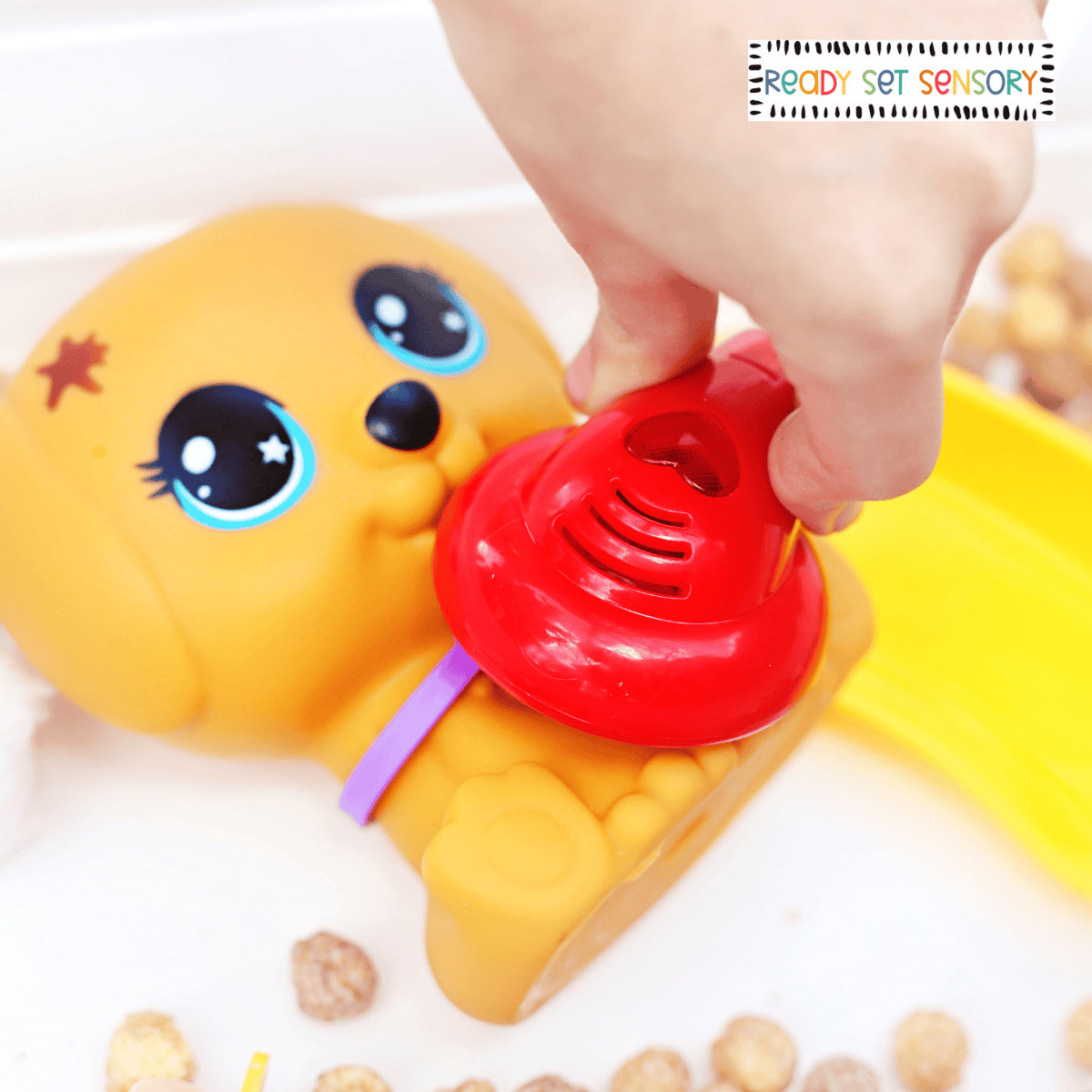
Kids naturally enjoy taking care of animals, and this setup supports that interest with scoop-and-pour play, easy fine motor practice, and familiar tools. The mix of cereal, cotton balls, and kid-friendly vet supplies invites slow, focused exploration as they pretend to help their little pet.
If your child enjoys caring for animals here, they may also love the imaginative setup in the Circus Sensory Bin or the themed play found in the Veggie Sensory Bin.


👇What You Need for a Toy Vet Clinic Sensory Bin
- Large bin or tray
- Reese’s Puffs cereal or another edible cereal filler – this is meant to resemble dog food.
- Small plush or plastic toy dog
- Vet Kit for Kids – Toy medical tools like a stethoscope, syringe, or tweezers
- Cotton balls – to “wash” the dog
- Bandaids – to fix the injuries
- Small bowl – for feeding and scooping.
- Scoop
- Sensory tweezers or tongs
💕Favorite Sensory Supplies
No products found.

⭐️How to Set Up This Pet Sensory Bin
Pour the cereal filler into the bin to create a base.
Place the toy dog on top of the cereal.
Add toy vet tools around the bin.

Set out cotton balls and bandaids for simple pet care play.
Place the small bowl, scoop, and tweezers in the bin for feeding activities.
Set the bin on a towel or mat for easier clean up.
💫Ways to Play This Community Helpers Activity
Invite kids to pretend they are veterinarians caring for pets in the community.
Let them give the dog a check-up with the stethoscope, syringe, or tweezers.
Offer cotton balls for gentle pretend cleaning or a simple “bath.”

Encourage kids to apply bandaids where the dog “needs help.”
Provide scoops and tweezers for feeding the dog with the cereal.
Allow calming sensory exploration as kids run hands through the cereal for scoop and pour play.
🧠Skills Kids Build in This Toy Vet Clinic Sensory Bin
- Fine motor strengthening from scooping, grasping, and using tweezers.
- Imaginative storytelling as they act out community helper roles.
- Sensory exploration with soft cotton balls, crunchy cereal, and smooth tools.
- Social and emotional learning through empathy and pet care routines.
- Early science and problem-solving skills through simple medical role play.

💡Tips and Variations for a Pet Sensory Bin
- Add extra toy pets to create a full community vet clinic.
- Offer clipboards and simple picture cards showing pet “problems” for kids to solve.
- Swap the cereal filler for a nonfood filler if preferred for classroom settings.
- Add different-sized scoops and tweezers to adjust the fine motor challenge.
- Include small bowls or food dishes to extend feeding and sorting play.

🧹Clean Up and Storage
- Pour cereal into an airtight container for short-term reuse.
- Wipe down toy vet tools and the pet after play.
- Store scoops, bowls, and tweezers in a labeled bag or container.
- Keep everything together in the sensory bin for quick setup next time.
- Replace cereal if it becomes damp, dirty, or crushed.
Vet Community Helpers Sensory Bin

Materials Needed
- Large bin or tray
- Reese’s Puffs cereal filler
- Toy dog
- Toy medical tools stethoscope, syringe, tweezers
- Cotton balls
- Bandaids
- Small bowl
- Scoop
- Sensory tweezers or tongs
Instructions
- Pour cereal into the bin to make an even base.
- Place the toy dog on top of the filler.
- Add the toy medical tools around the bin.
- Set out cotton balls and bandaids for pretend pet care.
- Add a small bowl, scoop, and tweezers for feeding play.
- Encourage kids to give the dog a check-up, clean it, apply bandaids, and feed it.
- Invite calming sensory exploration with scooping, pouring, and gentle hands-on play.
Notes
- Add more toy pets to expand the pretend vet clinic.
- Offer picture cards showing simple pet problems.
- Swap cereal for a nonfood filler if preferred.
- Use various scoops or tweezers to adjust the fine motor challenge.